Set practical personal goals for your next volleyball match using controllable actions, position-specific targets, and a simple review process. Learn when coaching tools or training support may add value.
How to Set Personal Volleyball Match Goals That Improve Focus and Performance
Set three match goals: one controllable volleyball action, one communication habit, and one point to review after the match. Keep them simple enough to remember between rallies, rather than relying on a goal such as winning, scoring a certain number of points, or earning more court time.
The best goal system depends on your position, experience, assigned role, and your team’s strategy. A paper journal may be enough for a player building a basic routine, while a volleyball tracking app, video analysis tool, or private coaching can be useful when you need clearer feedback. The goal is not to guarantee a result. It is to give your attention a useful direction when the match becomes fast, stressful, or unpredictable.
At a Glance
- Choose one technical performance goal, such as completing your serving routine or calling every reachable ball.
- Add one communication goal, such as giving clear transition calls or checking in with a teammate after an error.
- Finish with one review point: a short note, a statistic with context, or one video moment to revisit.
| Tracking Option | Best Use Case | Time Commitment | Typical Cost Consideration |
|---|---|---|---|
| Paper performance journal | Building a simple pre-match and post-match routine | Short notes before and after play | Usually the lowest-cost option |
| Volleyball tracking app | Keeping repeatable records across practices and matches | Requires regular data entry or review | May involve a subscription or feature limits |
| Video analysis tool | Reviewing decisions, movement, and positioning with visual context | Requires recording and clip review | May require equipment, software, or team access |
| Private volleyball coach | Getting technique correction, accountability, and individual feedback | Requires scheduled sessions and follow-through | Usually a higher-cost coaching option |
Start With Three Match Goals You Can Control
A useful personal goal should direct your next action, not judge your value as a player. Start with three small targets: a technical action, a decision-making action, and a communication habit. This structure is easier to carry into a match than a long list of statistics or vague instructions to “play better.”
Choose One Technical Action, One Decision-Making Action, and One Communication Habit
Your technical action could be finishing your approach with balance, using a consistent serve routine, or getting low before serve receive. Your decision-making action could be choosing a safer shot when the block is set or taking an available set instead of forcing a difficult option. Your communication habit could be calling the ball early, naming coverage responsibilities, or using a quick positive reset with a teammate.
Keep the wording active and specific. “Call every ball I can reach” is more useful than “communicate more.” “See the block before choosing my shot” is more useful than “make smarter plays.”
Keep Outcome Goals Separate From Performance Goals
Winning, getting more playing time, recording aces, or earning a starting role can matter to a player. However, these are often outcome goals. They can be affected by opponent quality, rotations, coaching decisions, team strategy, and match situations outside one player’s control.
Use outcome goals as long-term motivation, but bring process goals onto the court. A hitter cannot fully control the number of kills, but can control transition effort, shot selection, and communication after a blocked ball. This distinction helps prevent frustration when a good action does not produce an immediate point.
Use a Short Pre-Match Goal Card
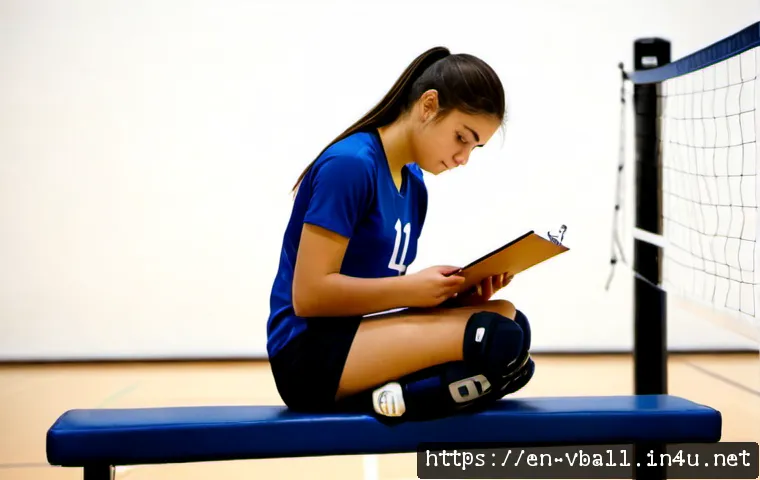
Write your three goals on a small note or in a performance journal before warm-ups end. Read it once, then reduce it to a few cue words. For example: “Low base. See block. Call early.” The card should support focus, not become another distraction to manage during the match.
Compare Goal Types and Choose the Right Tracking Method
The tracking method should fit the question you are trying to answer. A notebook works well for awareness and habits. A training app or video review may help when you need patterns over time. Coaching support can be valuable when you understand the problem but need help changing it.
Process, Performance, and Outcome Goals Compared
Process goals focus on actions: use your serving routine, move into coverage, or call the seam. Performance goals focus on how consistently you execute: maintain a balanced platform or make clear setter-hitter communication through each rotation. Outcome goals focus on results: win the match, get an ace, or lead the team in digs.
For match focus, process goals are usually the most practical. Performance goals can guide development over several matches. Outcome goals are best kept in perspective because they do not tell the whole story of an individual performance.
Paper Notebook, Training App, Video Review, or Coach Feedback
A paper notebook is useful when you want a low-friction habit. Record one goal, one example that supported it, and one adjustment for next time. A volleyball training app can help players or parents organize repeated observations, especially when a club program already uses shared tracking.
Video analysis is helpful when statistics alone cannot explain what happened. A low passing number, for example, may reflect a difficult serve, a late movement pattern, unclear communication, or a tactical choice. A clip can add context that a number cannot provide. Private coaching may be the better option when a player needs individual feedback on movement, technique, decision-making, or accountability.
When Paid Coaching or Analysis Tools May Be Worth the Investment
Consider paid coaching or analysis tools when you have a clear question and a plan to use the feedback. A player might need help identifying why serve receive breaks down, how to improve attacking options, or how to prepare for a new position. Before choosing a service, ask what feedback is included, how often it is delivered, whether it fits your level, and whether the coach or program understands your team role.
A paid option is less useful if it creates more data without giving you a practical next step. Look for support that turns observations into one or two trainable actions.
Build Position-Specific Targets for Your Next Match
Position-specific goals work better than generic goals because each role sees different decisions. Your coach may emphasize different measures based on the team system and the opponent, so treat these examples as starting points rather than fixed standards.
Setters: Decision Quality, Tempo, and Communication
A setter can target clear calls before the ball crosses the net, a consistent connection with hitters, or a calm reset after an off-target pass. Another useful goal is to notice the block and defense before choosing an option. Avoid judging every set only by whether it becomes a kill; pass quality, hitter availability, and opponent defense also affect the result.
Hitters and Middle Blockers: Approach Consistency, Shot Choices, and Transition Effort
Hitters can focus on a repeatable approach, seeing the block before selecting a shot, and transitioning quickly from defense to attack. Middle blockers may choose a goal such as closing the block with purpose, communicating the opponent’s likely option, or getting available after each defensive action. A strong match goal should not ask you to chase kills at the expense of coverage or team responsibilities.
Liberos and Defensive Specialists: Serve Receive, Coverage, and Calling the Ball
Liberos and defensive specialists can set goals around early movement, confident ball calls, court coverage, and organized free-ball communication. A practical target may be, “I will call seams early and help organize the next contact.” Do not reduce your review to digs alone. Good defensive positioning may keep a ball playable even when it does not become a recorded dig.
Servers: Routine, Target Selection, and Recovery After an Error
Servers benefit from goals that slow the moment down: use the same breath, visual target, and toss routine. You might choose a target area based on the serving plan, but remember that tactical instructions can change during a match. After an error, use a reset cue such as “next serve, same routine” rather than changing your entire approach in frustration.
Follow a Simple Before-During-After Match Routine

A match goal only helps if it stays visible without taking attention away from play. Use a short routine before, during, and after the match so you can learn from the experience without overthinking every rally.
Set Goals During Pre-Match Preparation
Choose your three goals after you know your role for the day, if possible. Consider the opponent, rotation responsibilities, and anything your coach has emphasized. Then write a short cue for each goal. If your role changes, adjust the goal to match the new responsibility instead of holding onto a target that no longer fits.
Use Reset Cues Between Rallies Instead of Constantly Checking Numbers
During the match, return to one cue at a time. After a tough rally, take a breath, identify the next job, and reconnect with teammates. Constantly counting attempts, errors, or points can pull attention away from the next ball. Your best in-match feedback is often simple: Was I ready? Did I communicate? Did I make the available decision?
Review Evidence After the Match With Notes, Statistics, or Video
After the match, write a few lines before the details fade. Note one moment where you followed your goal and one moment where you want a different response. If team statistics or video are available, use them to ask better questions rather than to create a negative story from one number. Context matters.
Avoid Goal-Setting Mistakes That Reduce Match Focus
Goal setting should make your role clearer. If it makes you more tense, distracted, or self-critical, simplify the plan.
Setting Too Many Targets at Once
Trying to fix serving, passing, blocking, attacking, conditioning, and confidence in one match spreads your attention too thin. Choose three goals at most for match day. Save the longer development list for practice planning or a conversation with a volleyball coach.
Chasing Stats That Do Not Match Your Role
Statistics can be useful, but they should match your assignment. A middle blocker, libero, setter, and serving substitute should not all use the same scorecard. Focus on the actions your role requires, and ask your coach which measures matter most in the current system.
Turning One Mistake Into a Negative Match Narrative
One missed serve or poor pass does not define the whole match. Replace “I am playing badly” with a specific response: “Reset my platform,” “Get my feet there earlier,” or “Call the next ball sooner.” A useful review identifies a pattern and a next action, not a personal label.
Selection Criteria and Comparison Summary
Choose self-tracking when you want a simple, low-cost routine and can honestly record what happened. Consider a training app or video analysis tool when you need repeatable records, clips, or easier comparisons across matches. Consider qualified private coaching when technique correction, individualized feedback, or accountability is your main priority.
- What specific match problem do I want to understand or improve?
- Will I review the notes, data, or clips consistently?
- Does the tool fit my position and team role?
- Will the feedback lead to a clear practice action?
- Can a coach, parent, or player verify that the program’s approach fits current team priorities?
For training journals, video tools, or coaching packages, check the official details for included features, review process, and current terms before choosing.
Closing Thoughts
Personal volleyball goals work best when they are small, controllable, and connected to your actual role. One technical action, one decision habit, and one communication habit can create a clear match plan without adding pressure. Review the match with curiosity, then carry only the most useful adjustment into the next practice or competition.
Useful Information to Remember
Goal cards are not just for elite players. They can help beginners, club athletes, school players, and experienced competitors organize attention. Keep the language short, use evidence after the match, and adjust your targets when your role or team strategy changes.
Important Notes
The right number and type of goals depend on age, experience, position, match role, and team strategy. No goal-setting system can guarantee a win, more playing time, or a particular statistic. A coach may use different performance measures based on the opponent, lineup, and team system, so confirm priorities when needed.
Frequently Asked Questions
Q1. How many personal goals should a volleyball player set for one match?
A1. Three is a practical starting point: one technical action, one decision-making action, and one communication habit. Some players may need fewer goals, especially when learning a new role or returning from a break.
Q2. Are volleyball tracking apps worth paying for compared with a simple notebook?
A2. They can be worthwhile if you will use the data consistently and need repeatable records, shared feedback, or video-related review. A simple notebook may be enough when your main need is a clear pre-match plan and a brief post-match reflection.
Q3. What are good personal goals for a volleyball player who does not get much playing time?
A3. Focus on preparation and readiness: learn rotation responsibilities, communicate during warm-ups and bench support, use a clear serving or entry routine, and review one skill to improve in practice. These goals build useful habits even when match opportunities are limited.