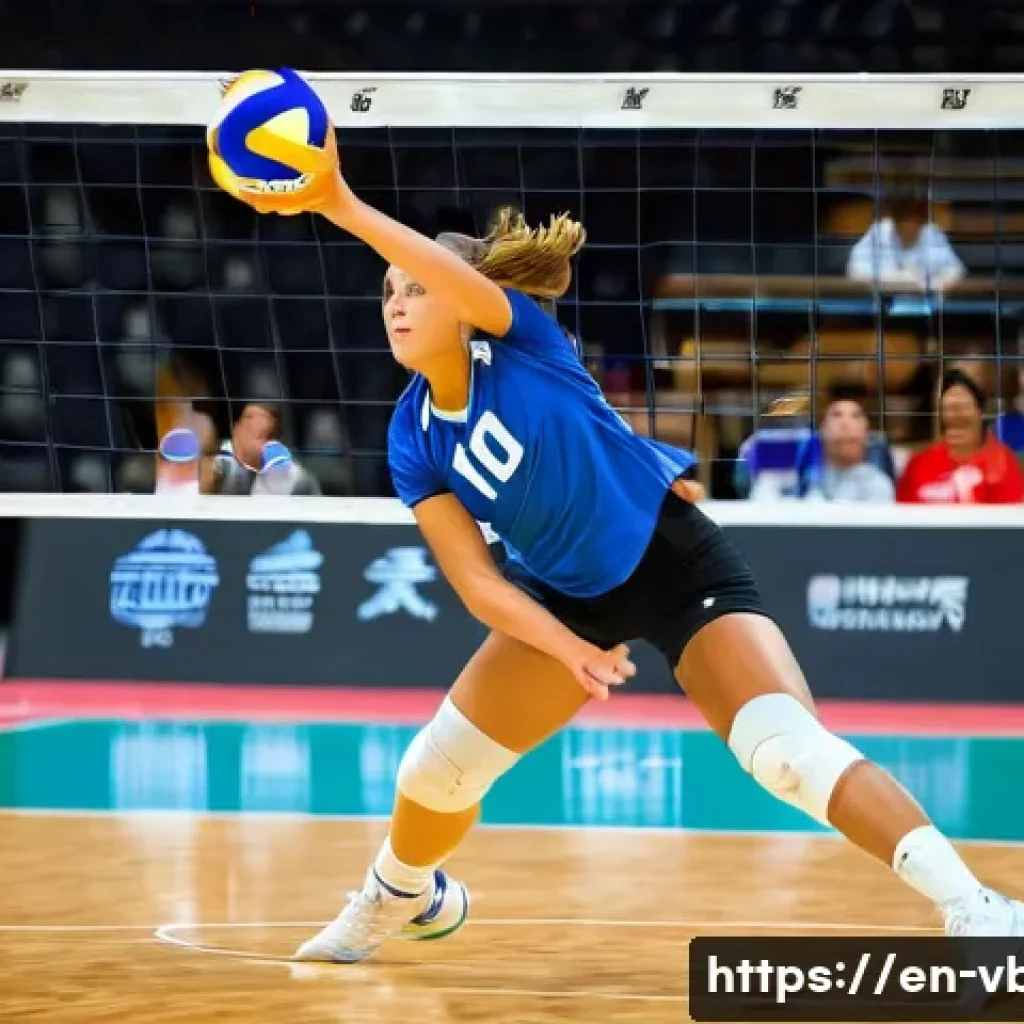
Hey there, fellow sports enthusiasts! Have you ever found yourself mesmerized by the sheer athleticism and rapid-fire strategy of a volleyball match, but secretly wished you understood every single nuance of its flow?

Trust me, you’re not alone. Having followed the sport for years, from casual games to intense professional showdowns, I’ve come to realize that truly appreciating volleyball goes beyond just watching; it’s about grasping the intricate dance of serves, spikes, and precise rotations.
The modern game is more dynamic than ever, constantly evolving with fresh tactics and incredible player skill, and understanding its core mechanics is key to unlocking a whole new level of appreciation for this incredible sport.
Let’s dive in deeper below and discover exactly how a match unfolds!
The Electric Start: Unleashing the Serve and Setting the Tone
The Crucial First Touch: More Than Just Putting the Ball in Play
Oh, the serve! It’s not just some mundane formality to kick off a point; it’s absolutely foundational to setting the entire rhythm of the rally. From my countless hours watching matches, both live and on screen, I’ve seen firsthand how a well-placed, powerful serve can completely dictate the opponent’s strategy for the upcoming point.
Think about it: a tough jump serve screaming over the net might force a scramble reception, instantly putting the receiving team on the defensive. Conversely, a float serve that wobbles unpredictably can be incredibly difficult to pass cleanly, denying the setter a perfect opportunity to run their offense.
It’s a psychological game too – a player consistently acing or forcing bad passes builds immense confidence, while the receiving team can feel the pressure mounting.
I’ve always found it fascinating how some players can make serving look so effortless, yet it requires an incredible amount of precision, power, and understanding of where the weaknesses might be on the other side of the court.
It’s not just about hitting the ball over; it’s about hitting it *to a specific spot* with *specific pace* to make life as hard as possible for the opposition, and that, my friends, is pure artistry in motion.
Reading the Reception: The Foundation of the Attack
Once that serve rockets over the net, the real chess match begins with the reception. This is where the receiving team scrambles, communicates, and tries to get that ball perfectly to their setter.
A perfect pass, often called a “dime,” allows the setter to choose from their full arsenal of offensive plays, sending the ball to any hitter at any tempo.
But let’s be real, perfect passes aren’t always a given, especially against a nasty serve. I’ve witnessed countless times how a shaky pass can severely limit a team’s options, forcing them into predictable or less powerful attacks.
It’s a moment of truth for the passers – often the libero and outside hitters – who have to absorb the serve’s power and direct it with finesse. Their ability to deliver a consistent, high-quality pass under pressure is what separates good teams from great ones.
When you see a team consistently make those seemingly impossible saves and still manage to get the ball to the setter in a playable position, you truly appreciate the silent heroes of the backcourt.
It’s a high-stakes moment, and watching how teams adapt to less-than-ideal passes is where you see their true grit and tactical depth shine.
The Symphony of Offense: Setting Up the Kill
The Setter’s Masterclass: Directing the Orchestra
Ah, the setter – truly the quarterback, the maestro, the puppet master of the offense! This position, in my humble opinion, is one of the most intellectually demanding and physically agile roles on the court.
It’s not just about bumping the ball up for a hitter; it’s about making split-second decisions under immense pressure, reading the block on the other side, understanding which hitter has the hot hand, and delivering a set that is perfectly timed and placed.
I remember one match where a setter, even after a chaotic dig, managed to sprint across the court and deliver a back-set so precise it led to an uncontested kill.
Moments like those are pure magic! Their vision and ability to deceive the opposing blockers are paramount. They might look one way, indicating a set to the outside, but then at the last second, flick it to the middle, leaving the blockers flat-footed.
It’s a constant battle of wits, and the best setters are always one step ahead, pulling strings that the audience often misses in the blink of an eye.
They’re the ones who truly unlock the potential of their hitters, transforming raw power into points.
The Art of the Attack: Spikes, Tips, and Rolls
Now, let’s talk about the grand finale of most rallies: the attack! While the thunderous spike is often the highlight, I’ve learned over the years that truly effective attacking is a nuanced blend of power, finesse, and court awareness.
Sure, a monster spike that screams off your hand and ricochets off a defender is exhilarating to watch, but equally effective are the deceptive tips, the cunning roll shots, and the well-placed off-speed attacks.
I’ve seen smaller hitters outsmart towering blockers simply by placing the ball exactly where no one expects it. It’s not always about brute force; sometimes, it’s about delicate touch and strategic thinking.
A skilled attacker can see the court, identify open spaces, and adjust their attack mid-air based on what the blockers are doing. From cross-court shots that defy gravity to laser-like line shots, each attacker brings their unique style and arsenal of moves.
The coordination between the setter and hitter, the timing of their jump, and the sheer athleticism involved make every attack a thrilling mini-drama in itself.
Fortress at the Net: The Crucial Role of Blocking
Reading, Reacting, Rejecting: The Blocker’s Mindset
When you talk about defense, the first thing that comes to mind for many is the block – and for good reason! It’s the first line of defense, a towering wall designed to stop an attack cold or, at the very least, slow it down for the backcourt defenders.
But believe me, blocking is far more complex than just jumping straight up. I’ve heard coaches emphasize that blocking is as much about intelligence as it is about athleticism.
Blockers have to quickly read the setter’s intentions, anticipate the hitter’s approach, and then time their jump and hand placement perfectly to either stuff the ball or channel it to their defenders.
It’s a delicate balance of committing too early and being faked out, or too late and watching the ball fly by. The best blockers are like chameleons, adapting to different hitting styles and even different setters’ tendencies.
It’s a high-stakes poker game at the net, and a well-executed block can single-handedly shift momentum, deflating the opposition and electrifying the home crowd.
Backcourt Brilliance: The Art of the Dig and Cover
Even the most formidable block won’t stop every attack, which is why the backcourt defense, led by the incredible libero, is absolutely indispensable.
Watching a libero dive full-stretch to dig up what looks like an impossible spike is, for me, one of the most thrilling moments in volleyball. These players are fearless, agile, and possess an almost supernatural ability to read the game.
They anticipate where the ball is going, throwing their bodies in front of rockets, and somehow, miraculously, keeping the rally alive. But it’s not just about diving; it’s about intelligent positioning, soft hands for deflections, and incredible communication with their teammates.
Every team also has to manage their “cover” – meaning, if a block is attempted, other players position themselves to pick up any tips or deflections that trickle over or around the block.
It’s a chaotic ballet of reaction and anticipation, and when a team pulls off a phenomenal dig followed by a counter-attack, it truly showcases the beauty of collective defense and relentless effort.
The Unseen Dance: Understanding Player Rotations
The Six-Player Shuffle: Keeping the Flow and Strategy Alive
Okay, so here’s something that often confuses new viewers but is absolutely critical to understanding the game: player rotations. Unlike some sports where players stick to one position on the field, in volleyball, players rotate clockwise after winning a point on the opponent’s serve.
This means that a middle blocker might end up in the back row, or an outside hitter might find themselves serving. It’s a constant, strategic shuffle that dictates who is where for each play.
I’ve always found it fascinating how coaches design their lineups not just for the starting positions, but for how those rotations will play out over the course of an entire set.
They have to anticipate who will be in the front row for blocking, who will be in the back row for defense, and how to maximize their best attackers and setters in their most impactful positions.
It’s a continuous puzzle, and understanding which players are rotating into which roles gives you a much deeper appreciation for the strategic genius behind a team’s lineup.
It truly underscores how every player needs to be versatile, ready to contribute from any spot on the court, even if it’s just for a few points before the next rotation.
Specializing Roles: Libero, Setter, and Universal Players
While everyone rotates, modern volleyball has also seen a huge emphasis on specialized roles, particularly with the libero. The libero, easily identifiable by their contrasting jersey, is a defensive specialist who can substitute freely into the back row without counting as an official substitution.
They can’t serve, block, or attack from the front row, but their passing and digging skills are absolutely vital. Then you have your setters, who often play all around but primarily direct the offense.
Other positions, like outside hitters (often the primary attackers), middle blockers (responsible for quick attacks and blocking), and opposite hitters (who often hit from the back row and provide a secondary attacking option), all have unique responsibilities that shift with the rotation.
Understanding these specialized roles and how they interact within the rotation truly unveils the sophisticated layers of team strategy. It’s like watching a perfectly synchronized machine, where every player has a distinct, yet interconnected, job to do.
To give you a clearer picture, here’s a quick rundown of some key roles:
| Player Role | Primary Responsibilities | Key Skills |
|---|---|---|
| Setter | Dictates offense, delivers sets to attackers | Decision-making, agility, precise ball handling |
| Outside Hitter | Primary attacker, passes, blocks | Powerful attacking, good passing technique, jumping ability |
| Middle Blocker | Blocks opponent’s attacks, quick attacks | Timing, jumping, quick reflexes, court awareness |
| Opposite Hitter | Secondary attacker, often hits from back row, blocks | Versatility, attacking power, defensive contribution |
| Libero | Defensive specialist, receives serves, digs attacks | Exceptional passing, diving, court awareness, communication |
It truly shows how every role, no matter how specialized, contributes to the team’s overall success, creating a dynamic and exciting game where every player matters.
Navigating the Tense Moments: Set Points and Deciding Sets
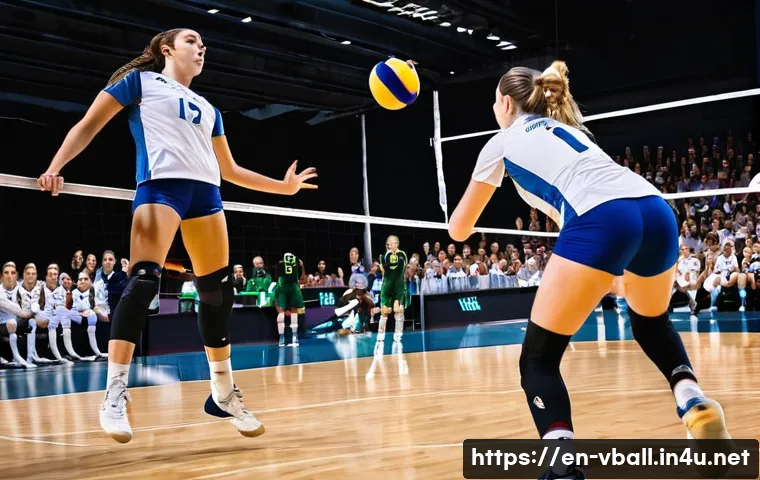
The Pressure Cooker: When Every Point Matters
If you’ve ever been to a live volleyball match, you know that the atmosphere absolutely crackles when a team reaches “set point.” This is where the intensity skyrockets, and every single rally feels like a mini-final.
I’ve witnessed countless comebacks from teams facing multiple set points, and conversely, seen teams crumble under the pressure. It’s a testament to mental fortitude and clutch performance.
The crowd gets louder, the players’ focus sharpens, and the strategic timeouts become absolutely critical. Coaches use these moments to calm nerves, draw up specific plays, or disrupt the opponent’s momentum.
As a spectator, these are the moments I live for – the sheer drama of a long rally at set point, where a single dig, a perfectly timed block, or a powerful spike can determine the fate of an entire set.
It’s where the raw emotion of the sport truly comes to the forefront, and the stakes couldn’t be higher.
The Ultimate Showdown: Fifth Set Thrillers
And then, there’s the deciding fifth set. Oh, the fifth set! Unlike the first four sets which typically go to 25 points, the fifth set is usually played to 15 points, and you still need to win by two.
This makes for unbelievably fast-paced, heart-stopping action where every error feels magnified and every point feels like a giant leap towards victory.
I’ve seen teams, physically exhausted, dig deep into their reserves to pull out a victory in these nail-biting finishes. The momentum swings can be incredibly dramatic – one moment a team is up by four, the next the score is tied, and the tension is almost unbearable.
It’s a pure test of endurance, skill, and mental resilience, and honestly, there’s nothing quite like the energy of a packed arena during a fifth-set thriller.
These are the games that stick with you, the ones you talk about for weeks, showcasing the absolute pinnacle of competitive volleyball.
The Unsung Heroes: Specialized Roles Beyond the Spotlight
The Craft of Serving Specialists and Defensive Substitutes
While we often highlight the setters and attackers, modern volleyball has really leaned into the importance of specialized roles, even beyond the libero.
Sometimes, a coach will strategically bring in a “serving specialist” – a player whose primary job is to come in solely to deliver a tough serve, often a jump float or a power jump serve, to try and disrupt the opponent’s reception.
They might play only one or two points, but their impact can be massive in gaining a crucial break point. I’ve seen these players come in cold off the bench and unleash an ace that completely shifts the momentum.
Similarly, coaches might use defensive specialists to shore up their back row in specific rotations, bringing in a player known for their exceptional digging or passing during critical moments.
These tactical substitutions, though often quick and fleeting, are masterstrokes of coaching strategy that significantly impact the flow of a match. It just goes to show you that every player on the roster has a vital part to play, even if they’re not in the starting six.
The Bench Impact: Energy, Support, and Strategic Depth
It’s easy to focus solely on the players on the court, but having spent time around various teams, I can tell you that the energy and support from the bench are absolutely invaluable.
The players not currently on the court aren’t just sitting there; they’re constantly analyzing the game, cheering on their teammates, and staying ready for their moment.
They provide critical insights, encourage effort, and maintain a high-energy atmosphere that can lift the entire team. Sometimes, a player from the bench might be called upon to make a game-changing play, whether it’s a clutch serve, a timely block, or a critical defensive stop.
The depth of a roster, the collective belief, and the positive reinforcement from the sidelines are all crucial components of a successful volleyball team.
It reinforces the idea that volleyball is truly a team sport, where every single person, from the starting setter to the deepest bench player, contributes to the overall success.
Beyond the Basics: Advanced Tactics and Player Evolution
The Ever-Evolving Game: From Power to Precision
Volleyball isn’t a static sport; it’s constantly evolving, and watching that evolution over the years has been truly captivating. What once might have been a game primarily focused on brute power, especially in attacking, has now transformed into a sophisticated blend of athleticism, precision, and strategic intelligence.
Teams are constantly innovating with new offensive sets, more complex blocking schemes, and incredibly specialized defensive formations. I’ve seen teams switch from a traditional 5-1 offense to a faster, more unpredictable 4-2 or even incorporate a second setter in specific rotations to create different attacking angles.
The physical conditioning of players has also reached new heights, allowing for incredible feats of agility and endurance throughout long, grueling matches.
It’s like watching a living, breathing entity that constantly adapts and refines itself, pushing the boundaries of what’s possible on the court.
The Rise of Data Analytics: Unlocking New Strategies
Another fascinating development I’ve observed is the increasing integration of data analytics into modern volleyball. It’s no longer just about gut feelings or scouting reports; coaches and analysts are now using sophisticated statistical models to break down opponent tendencies, optimize player matchups, and identify tactical advantages.
They’re tracking everything from serve reception percentages in specific zones to the hitting efficiency of individual players against different blocks.
This data-driven approach allows teams to prepare with unprecedented precision, tailoring their game plans to exploit the smallest weaknesses. From my perspective, it adds an entirely new layer of intellectual intrigue to the sport.
It’s a blend of raw athletic talent with cutting-edge analytical insights, making the modern game not just thrilling to watch but also incredibly intelligent.
It truly shows how every marginal gain is being chased to reach the pinnacle of performance.
Wrapping Things Up
As we’ve journeyed through the intricate and captivating world of volleyball, from the thunderous serve that ignites a point to the delicate touch of a setter orchestrating an attack, and the fearless, full-extension digs of a libero keeping a rally alive, it’s clear that this sport is a magnificent ballet of power, precision, and profound strategic genius. My sincerest hope is that this deep dive has not only ignited a new passion within you or deepened an existing one for the game but has also armed you with a fresh, analytical lens through which to appreciate every spike, every block, and every hard-fought rally. There’s a certain magic to volleyball that truly gets under your skin, a unique blend of individual brilliance converging with seamless team synergy that transforms every match into an unforgettable, edge-of-your-seat experience. It’s undeniably more than just a game; it’s a testament to peak human athleticism, incredible mental fortitude, and the enduring power of working together, perfectly synchronized, towards a shared objective. The complexities we’ve uncovered only scratch the surface, inviting you to explore further and find your own favorite aspects of this incredible sport.
Handy Tips for the Volleyball Enthusiast
1. Find Your Local Court: Whether you’re looking to play recreationally or competitively, a quick online search for “volleyball clubs near me” or “beach volleyball courts [your city]” can connect you to vibrant local leagues and exhilarating pickup games. It’s an absolutely amazing way to meet like-minded people, make new friends, and get active while having a blast!
2. Master the Basics First: Don’t feel pressured to jump straight into trying to spike like a professional from day one. Instead, focus your energy on developing consistent passing, precise setting, and reliable serving techniques. Building a strong, fundamental foundation will make learning the more advanced, intricate techniques much easier, more rewarding, and infinitely more enjoyable down the line.
3. Watch the Pros: Seriously, consider watching professional matches a masterclass in action. Tune into the Olympics, FIVB tournaments, or intense college championships. Pay close attention to player positioning, the intricate offensive strategies teams employ, and how defensive rotations dynamically shift. You’ll undoubtedly pick up so many subtle nuances and tactical insights you might otherwise completely miss.
4. Invest in Good Gear: While you certainly don’t need a lot of expensive equipment to start playing, investing in a good pair of knee pads is an absolute lifesaver, especially if you’re planning on diving for those impossible-looking balls. Additionally, proper athletic shoes with excellent ankle support are a total game-changer for quick directional movements, explosive jumps, and landing safely. Trust me on this one, your joints will genuinely thank you later!
5. Communicate, Communicate, Communicate: Volleyball is, at its heart, a quintessential team sport, and effective, constant communication is absolutely non-negotiable for success. Always call for the ball loudly and clearly, enthusiastically acknowledge your teammates’ good plays, and provide constructive feedback. This active dialogue builds crucial trust, fosters camaraderie, and ultimately leads to a much smoother, more cohesive, and significantly more successful game experience for everyone involved.
Key Takeaways from the Court
In summing up our extensive exploration, volleyball truly stands out as a relentlessly dynamic and engaging sport where every single element, from the initial, electrifying serve to the decisive, final attack, is intricately interconnected and plays a vital, irreplaceable role. We’ve meticulously observed how individual skill, combined with astute tactical prowess and unwavering teamwork, converges on the court to create truly breathtaking rallies and profoundly memorable moments. Gaining a deeper understanding of the nuanced responsibilities of each specialized position, grasping the strategic importance of player rotations, and appreciating the immense pressure during high-stakes set points profoundly elevates both the viewing and playing experience, adding layers of appreciation. It’s fundamentally a game of constant adaptation, requiring split-second decision-making, razor-sharp quick thinking, and relentless physical and mental effort. Ultimately, it proves beyond a shadow of a doubt that the most successful teams are those that master both the formidable physical demands and the intricate mental chess match that unfolds with every serve and every hard-won point.
Frequently Asked Questions (FAQ) 📖
Q: How exactly does scoring work in volleyball, and what does it take for a team to actually win a set or the whole match?
A: Oh, this is such a common question, and honestly, once you get it, the game makes so much more sense! Modern volleyball uses what we call “rally scoring.” This means a point is scored on every single rally, regardless of which team served.
If your team serves and wins the rally, you get a point. If the other team serves and you win the rally, you get a point AND the serve. To win a set, a team generally needs to score 25 points, but here’s the kicker: you absolutely have to win by at least two points.
So, if the score is tied at 24-24, the game doesn’t just stop at 25; it’ll keep going to 26-24, or 27-25, and so on, until one team gets that crucial two-point lead.
I’ve been in matches where a set went well into the 30s, and let me tell you, the tension is just electric! For a full match, it’s typically best three out of five sets.
So, the first team to win three sets takes home the victory. Sometimes, for shorter tournaments or lower divisions, it might be best two out of three.
That final, deciding fifth set, often called a “tie-breaker,” usually goes only to 15 points, but again, with that essential two-point lead. It’s all about consistency and grit!
Q: The rotations look like such a confusing dance on the court! Can you break down player positions and how those rotations actually work?
A: You hit the nail on the head – it really is a dance, and a super strategic one at that! At first glance, it can seem like pure chaos, but once you understand it, you see the genius.
There are six players on the court for each team, and they generally cycle through six positions. Think of it like a clock, moving clockwise after every side-out (when your team wins the serve back from the opponent).
Each position has a specific number, from 1 (right-back, the server’s spot) all the way to 6 (middle-back). When a team earns the serve back, their players rotate one position clockwise.
This means every player gets a chance to be in the front row (for attacking and blocking) and the back row (for digging and passing). It keeps the game dynamic!
Key positions include the Setter, who’s like the quarterback, orchestrating the offense; Outside Hitters and Opposite Hitters, who are your main attackers; Middle Blockers, who specialize in blocking at the net; and the amazing Libero, a defensive specialist who wears a different colored jersey and can only play in the back row, making incredible saves!
The rotations ensure that every player is well-rounded, but coaches are constantly strategizing to make sure their best attackers are in the front row at key moments.
It’s a constant chess match, and it’s fascinating to watch how teams manage it.
Q: Beyond the very basics, what are some of the key strategies that modern volleyball teams use to make the game so exciting and unpredictable?
A: This is where the game truly elevates from simply hitting a ball over the net to a mesmerizing display of athletic intelligence! Modern volleyball is all about strategic offense and rock-solid defense.
On the offensive side, it’s not just about slamming the ball as hard as you can. Teams employ intricate “set plays” – imagine a setter faking one pass only to send a quick, deceptive set to a middle blocker for a rapid-fire attack, or a combination play where two hitters converge on the net simultaneously to confuse the block.
My favorite is watching a perfectly executed pipe attack, where a back-row player takes off from behind the attack line for a powerful spike – it’s pure artistry!
Defensively, it’s a whole different beast. Teams meticulously plan their “block-defense” schemes. The blockers at the net try to funnel the opponent’s attacks to specific areas of the court where their defenders (libero included!) are strategically positioned.
It’s like a synchronized ballet of anticipation and reaction. They’re constantly analyzing the opponent’s tendencies, looking for weaknesses, and adapting on the fly.
This level of tactical depth, combined with incredible individual skill, is what makes every rally a mini-drama, and why I find myself glued to every match!